

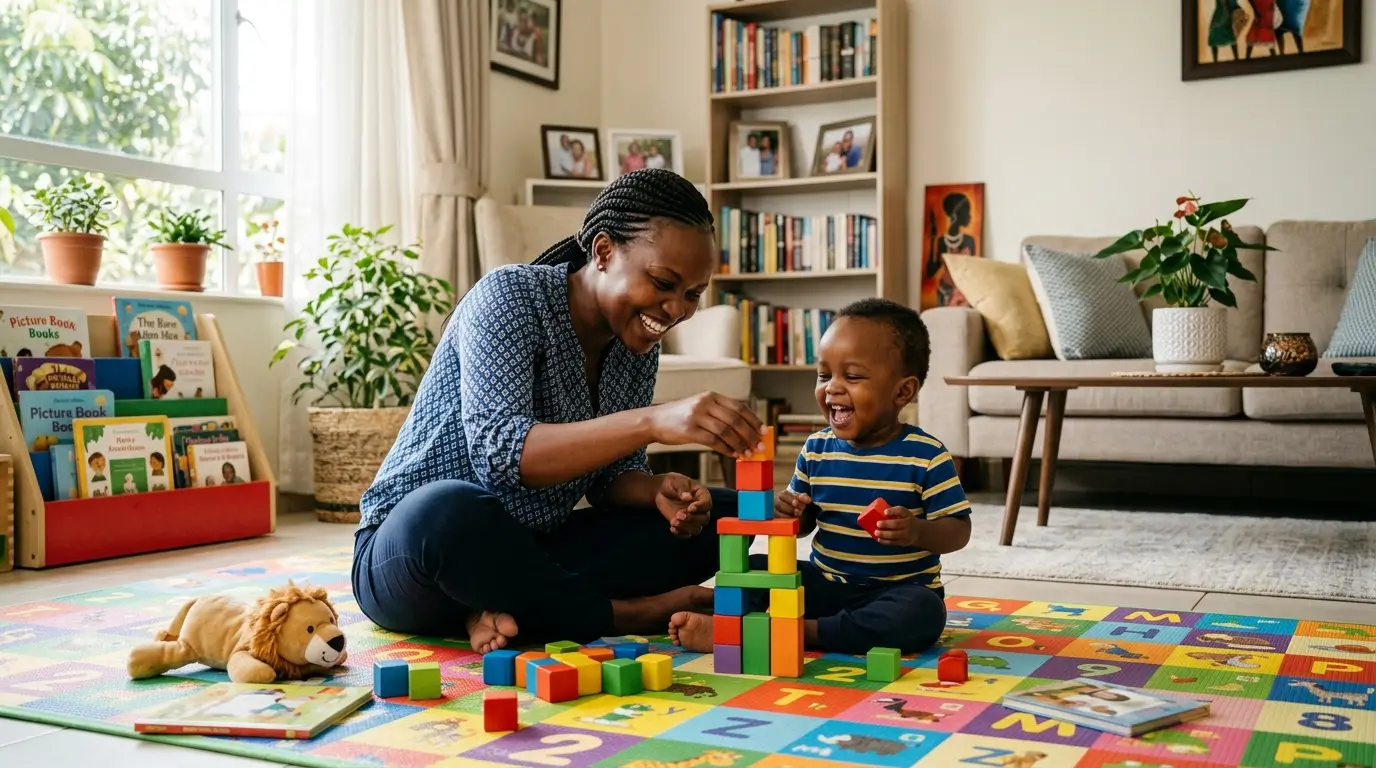
One of the most important things you can do as a Nairobi parent is actively help your child bond with their new nanny — and the way you handle those first few days sets the tone for everything that follows.
You have done the hard work. You searched, vetted, interviewed, and finally found a nanny you trust. You are ready to go back to work. And then it happens — your child clings to your leg, bursts into tears the moment the nanny arrives, and refuses to let you leave.
Sound familiar?
You are not alone. This scene plays out in thousands of Nairobi households every week. And while it can feel heartbreaking in the moment, the truth is that a child who cries when you leave is actually showing you something wonderful — they are securely attached to you. The goal now is to gently extend that circle of trust to include their new nanny.
In this guide, we walk you through exactly how to help your child bond with their new nanny in Nairobi — with practical, proven strategies that work for babies, toddlers, and older children alike.
Why Helping Your Child Bond with Their New Nanny in Nairobi Takes Intention
Many Nairobi parents assume that bonding between a child and a new nanny will happen naturally over time — and while that is partly true, leaving it entirely to chance often results in weeks of unnecessary distress for everyone involved.
The nanny-child bond is not just about familiarity. It is rooted in what child development experts call attachment theory — the idea that children need a consistent, responsive, and emotionally available caregiver to feel safe. When a child feels safe with their nanny, they are better able to manage their emotions, explore their environment, and thrive developmentally.
Children with secure attachments are better able to manage emotions, seek help, and resolve conflict. Knowing their caregiver will be there for them allows children to explore, try new things, and build competence.
When you take deliberate steps to help your child bond with their new nanny in Nairobi, you are not just making drop-offs easier. You are laying the foundation for your child’s emotional wellbeing, confidence, and long-term development.

Understanding Separation Anxiety: The First Step to Helping Your Child Bond with Their New Nanny in Nairobi
Before you can effectively help your child bond with their new nanny in Nairobi, it helps to understand what is happening emotionally for your child during this transition.
Separation anxiety is absolutely normal and a healthy phase of child development. It is a sign that your child feels loved by you — their primary caregiver — and misses the love, comfort, and safety associated with your presence. This strong bonding is referred to as “secure attachment.”
Separation anxiety typically begins around 6 to 9 months, sometimes as early as 4 months, and often peaks at around 12 to 18 months. It can also return during toddlerhood, particularly when triggered by major changes such as a new baby, a new home, or a new caregiver.
In a Nairobi context, this transition can feel even more pronounced. Many Kenyan children are very closely bonded with their mothers, particularly when a mum has been on maternity leave or working from home before returning to the office. The introduction of a new nanny represents a significant change in daily life — and children feel that change deeply, even when they cannot yet express it in words.
Understanding this helps you approach the bonding process with patience rather than frustration. Your child is not being difficult. They are being human.
Tip #1: Introduce the Nanny Gradually — A Key Strategy to Help Your Child Bond with Their New Nanny in Nairobi
One of the most effective ways to help your child bond with their new nanny in Nairobi is to avoid a sudden, cold-start introduction. A gradual introduction gives your child time to observe the nanny, warm up at their own pace, and begin associating the new caregiver with safety and positive experiences.
How to Do a Gradual Introduction in Nairobi
Stage 1 — The First Meeting: Invite the nanny to your home for a short visit before her official start date — ideally on a day you are relaxed and present. Let your child observe the two of you interacting warmly. Do not force interaction between the child and the nanny at this stage. Simply let your child watch.
Stage 2 — Joint Play Time: On the next visit, have the nanny join you and your child in a familiar activity — playing with toys, reading a book, or a simple outdoor activity in the compound. You remain present. The nanny begins to participate, following your child’s lead.
Stage 3 — Short Separations: Once your child shows signs of being comfortable — smiling at the nanny, accepting toys from them, or initiating interaction — begin stepping away briefly. Start with five to ten minutes in another room. Gradually increase the time away over several days.
Stage 4 — Full Handover: When your child is clearly comfortable and the nanny has established a basic rapport, make the full handover with a calm, confident goodbye.
A slow introduction helps build trust and teaches your child they can handle being away from you. It can take a few days to a few weeks for your child to acclimate, depending on their comfort level and temperament.
This staged approach is one of the most reliable ways to help your child bond with their new nanny in Nairobi — and it pays dividends in a much smoother transition for everyone.

Tip #2: Share Everything About Your Child with the Nanny — This Helps Your Child Bond with Their New Nanny in Nairobi Faster
A nanny who understands your child deeply is a nanny your child will warm up to more quickly. One of the most powerful things you can do to help your child bond with their new nanny in Nairobi is to equip the nanny with as much knowledge about your child as possible before she begins.
What to Share with Your Nanny
Create a simple written or verbal handover that covers:
- Daily routine — nap times, meal times, bath time, and bedtime schedule
- Favourite toys, games, songs, and books — these are instant connection tools
- Food preferences and any allergies or restrictions
- Comfort items — a specific blanket, a soft toy, or a dummy that soothes your child
- Triggers and fears — what upsets your child and what calms them down
- Developmental stage — what your child can do, what they are learning, and how they communicate
- Words and phrases your child uses — especially for younger children who are still developing language
- Your child’s personality — are they shy around new people? Do they warm up slowly? Are they energetic or calm?
Each family has unique cultural and relational norms. The goal is not to impose a single approach but to support the child within the family’s cultural framework — using inclusive language and respecting diverse family structures.
A nanny who knows that your three-year-old calls their blanket “softie” and loves the song Twinkle Twinkle Little Star can use that knowledge to build connection from day one. That kind of personalised care is what helps your child bond with their new nanny in Nairobi far more quickly than time alone.
Tip #3: Keep Your Goodbyes Short and Confident — This Is Critical to Helping Your Child Bond with Their New Nanny in Nairobi
How you say goodbye each morning has a significant impact on how quickly your child bonds with their new nanny in Nairobi. This is an area where many well-meaning Nairobi parents unknowingly make the process harder for their children.
Your child is well attuned to your emotions. If you exude calm and confidence, they will feel more trusting of their caregiver, whereas if you look anxious and worried, they will mirror your emotions. Say your goodbyes with a confident smile and wave to help your child get off to a better start.
What to Do at Goodbye Time
- Keep it short and loving — a quick hug, a kiss, “I love you, I’ll be back after work,” and then leave.
- Do not linger — extended goodbyes signal to your child that there is something to worry about.
- Never sneak out — this may feel easier in the moment, but sneaking out will only cause your child confusion when they turn around and discover that you are gone, and repeated sneak-outs will erode their trust.
- Use time references your child can understand — for toddlers, “I’ll be back before dinner” or “after your nap” is more meaningful than “at 5pm.”
- Stay calm even if they cry — crying at goodbye is developmentally normal and does not mean your child is miserable all day. In most cases, children settle within minutes of a parent leaving.
Get your child gradually used to the substitute caregiver. Keep goodbyes short. Be cheerful and talk about joint activities planned for later.
Consistency is everything here. The more predictable and calm your goodbye routine is, the faster your child will learn to trust that you will return — and the more secure they will feel in the care of their new nanny in Nairobi.
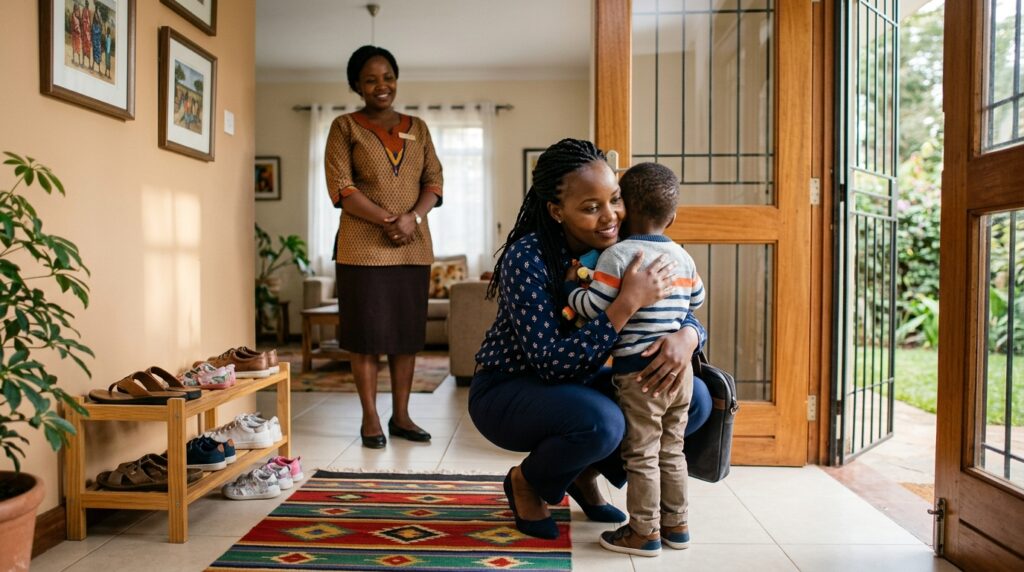
Tip #4: Establish a Consistent Daily Routine — Structure Helps Your Child Bond with Their New Nanny in Nairobi
Children are deeply comforted by predictability. When a child knows what to expect from their day, they feel safe — and a child who feels safe is a child who is able to open up to a new person in their life.
Establishing a clear, consistent daily routine with your new nanny is one of the most underrated ways to help your child bond with their new nanny in Nairobi.
The keys to navigating the transition phase are collaboration, patience, consistency, and routines. Your warmth, coupled with engaging the child in a variety of activities, will ease the transitions over time.
Building a Routine That Supports Bonding
Work with your nanny to create a daily schedule that includes:
- A consistent wake-up and morning routine
- Fixed meal and snack times — ideally with the foods your child already loves
- Structured play time — both guided activities and free play
- A nap schedule that mirrors your child’s existing sleep rhythm
- Outdoor time where possible — a walk around the estate, time in the compound, or a visit to a nearby park
- A calming wind-down routine before your return home
When the nanny consistently delivers these routines with warmth and patience, your child begins to associate the nanny with comfort, safety, and fun. That association is the very foundation of a healthy bond between your child and their new nanny in Nairobi.
Tip #5: Encourage Shared Activities That Build Connection
To actively help your child bond with their new nanny in Nairobi, give the nanny specific tools and activities that naturally create connection and joy between them.
Activities That Accelerate Bonding Between a Child and Their New Nanny in Nairobi
For babies and young toddlers:
- Peek-a-boo and other interactive games — peek-a-boo gently reinforces that just because a caregiver is temporarily out of sight doesn’t mean they won’t come back, making it a great tool for helping a child form and strengthen an attachment relationship.
- Singing familiar songs and nursery rhymes
- Gentle physical play — tickling, bouncy games, and clapping games build physical trust
- Feeding time — a nanny who feeds a baby regularly becomes a deeply trusted figure very quickly
For toddlers and pre-schoolers:
- Arts and crafts — drawing, colouring, playdough, and simple collages
- Outdoor play — kicking a ball, blowing bubbles, or exploring the garden together
- Cooking together — letting your child “help” prepare a simple snack creates shared pride
- Storytelling — reading books or making up simple stories together
- Dancing and music — movement releases joy and creates happy shared memories
For older children:
- Homework support — a nanny who helps with schoolwork becomes a trusted mentor figure
- Board games and puzzles — collaborative play builds rapport quickly
- Helping with household tasks together — giving children a sense of contribution builds confidence and connection

Tip #6: Use Comfort Objects to Bridge the Gap
For younger children especially, a familiar object can serve as a powerful emotional bridge during the bonding process with a new nanny.
Transition objects can be very helpful for children experiencing separation anxiety. Younger children often find comfort in a favourite blanket or stuffed animal. Older children may find it comforting to keep a small reminder of mum or dad in their pocket — such as an inexpensive pendant or a small smooth stone from a recent family outing.
In a Nairobi household, this might be a specific soft toy your child sleeps with, a small photo of you placed near where they play, or even a piece of clothing that carries your scent. These objects remind your child that you exist and will return — and they lower the emotional temperature enough to let your child begin warming up to the nanny.
Tip #7: Communicate Openly with Your Nanny Every Day
An essential but often overlooked aspect of helping your child bond with their new nanny in Nairobi is building a strong communication channel between you and the nanny.
Alignment between nannies and parents ensures the child receives consistent responses. Use daily logs, open communication, and shared routines. While your bond with your child is important, the nanny should collaborate rather than compete, especially during transitions.
Practical Communication Tools for Nairobi Families
- End-of-day debrief — ask the nanny each evening what went well, what was difficult, and what the child enjoyed most.
- WhatsApp updates — a simple message or photo during the day reassures you and helps you track how bonding is progressing.
- Daily log — a simple notebook or app where the nanny notes meals, moods, nap times, and notable moments. This helps you spot patterns and gives you conversation material with your child.
- Weekly check-ins — a brief structured conversation once a week to review the child’s progress, address any concerns, and adjust routines if needed.
A nanny who feels informed, respected, and supported by you as an employer brings more confidence and warmth to their role — and that confidence is felt directly by your child.
How Long Does It Take for a Child to Bond with Their New Nanny in Nairobi?
This is one of the most common questions Nairobi parents ask — and the honest answer is: it depends.
It can take a few days to a few weeks for a child to acclimate to a new caregiver, depending on the child’s comfort level and temperament.
As a general guide:
- Babies under 6 months tend to adapt relatively quickly, often within one to two weeks, as they are still developing their sense of attachment to specific caregivers.
- Babies aged 6–18 months are in peak separation anxiety territory and may take two to four weeks to fully settle with a new nanny.
- Toddlers aged 18 months to 3 years can take anywhere from two to six weeks, particularly if they are strongly bonded with their primary caregiver.
- Children aged 3 and above can often verbalise their feelings, which helps the process, and typically settle within two to three weeks with the right approach.
Be patient. Be consistent. And trust that with deliberate effort, the bond between your child and their new nanny in Nairobi will grow.

Signs That Your Child Has Successfully Bonded with Their New Nanny in Nairobi
Knowing when the bonding is working is just as important as knowing how to encourage it. Watch for these positive signs:
If your child eagerly greets the nanny with smiles, hugs, or excitement, it is a strong indicator of a positive bond. Children naturally gravitate toward people who make them feel safe, loved, and happy.
Other signs that your child has bonded well with their new nanny in Nairobi include:
- Calm goodbyes — your child waves you off without prolonged distress
- Positive storytelling — they tell you what they did with the nanny and share highlights from their day
- Seeking the nanny for comfort — when upset or hurt, they go to the nanny rather than waiting only for you
- Improved mood overall — they seem settled, happy, and well-rested
- Healthy balance of independence — a child who feels secure with their caregiver will not show excessive clinginess or distress when the nanny leaves. Instead, they will have a healthy balance — seeking out the nanny for support when needed but also displaying confidence in their own abilities.
When you see these signs consistently, you can be confident that your efforts to help your child bond with their new nanny in Nairobi have worked.
When to Be Concerned: What to Watch For
While the bonding process takes time, there are certain signs that suggest something is not right and may require you to reassess the situation:
- Your child’s distress is escalating rather than improving after four to six weeks
- The child shows physical signs of stress — refusing food, sleep regression, withdrawal
- The nanny seems disengaged, impatient, or dismissive toward your child
- Your child clearly shows preference against the nanny specifically — not all caregivers
- You observe any behaviour from the nanny that concerns you during unannounced check-ins
You have to go with your gut. If you get a feeling that something is off, just go with it. The worst thing is that you were wrong. The best thing is that you saved your child from a bad situation.
If something feels wrong, trust your instincts as a parent. A nanny who is truly right for your family is a nanny your child will eventually warm up to. If they consistently do not — after a genuine, patient transition period — it may be time to reconsider the placement.
Frequently Asked Questions About Helping Your Child Bond with Their New Nanny in Nairobi
Start with a slow, gradual introduction over several days before the nanny’s official start. Stay present during the first interactions and let your child warm up at their own pace. Share everything the nanny needs to know about your child’s routine, preferences, and personality. The more the nanny understands your child from the very first day, the faster trust will build.
Yes — in most cases, this is completely normal and developmentally healthy. Separation anxiety peaks between 6 and 18 months and can come and go through toddlerhood. The key is to keep your goodbyes short, warm, and consistent. In almost all cases, children settle within minutes of a parent leaving — ask your nanny to send you a quick update message after you leave if the uncertainty is affecting your workday.
Allow at least two to six weeks for the transition, depending on your child’s age and temperament. Toddlers between 18 months and three years tend to take longer, while babies under six months often adjust within one to two weeks. Be patient, consistent, and keep the environment as calm and routine-driven as possible during this period.
Yes — if your schedule allows, spending time at home during the first few introductory visits while the nanny and your child interact together is highly beneficial. This allows your child to see that you trust the nanny, which makes it much easier for them to extend that trust as well.
Do not force interaction. When a child is actively resisting a caregiver, it is important not to force them into that person’s arms. Instead, give them time to gradually warm up on their own whenever possible. Let the nanny be present and warm without pressuring the child. In most cases, curiosity will eventually win out — especially if the nanny uses play, songs, and the child’s favourite activities to gently invite connection.
Yes — children are capable of forming multiple secure attachment bonds simultaneously. A strong bond with a nanny does not diminish or compete with the parent-child bond. In fact, children who have secure attachments with multiple caregivers tend to be more socially confident and emotionally resilient. A good nanny in Nairobi complements your relationship with your child — she does not replace it.
Watch for consistent positive signs over time — your child is happy to see the nanny, settles quickly after you leave, shares positive stories about their day, and shows no signs of sustained distress or regression. A good nanny is patient, observant, genuinely warm with your child, and communicates openly with you about their day.
Reputable nanny agencies in Nairobi include Sashley Nannies, Nairobi Nanny, NurturingNest Homecare Agency, Max Child Care, Nestara Kenya, and Msichana.co.ke. These agencies vet, train, and match nannies to families based on specific childcare needs — and most offer replacement guarantees if the first placement does not work out.
Final Thoughts: Helping Your Child Bond with Their New Nanny in Nairobi Is One of the Best Gifts You Can Give Them
The effort you put into helping your child bond with their new nanny in Nairobi is not just about smoother mornings or less stressful drop-offs — although it absolutely achieves both of those things.
It is about giving your child the gift of a safe, loving secondary relationship that supports their emotional development, builds their confidence, and enriches their world. A child who has a warm, trusting bond with their nanny is a child who feels secure enough to grow — to explore, to learn, to laugh, and to thrive.
It will take patience. There will be mornings with tears. There will be days that feel like two steps back. But with deliberate intention, a gradual introduction, consistent routines, and open communication between you and your nanny, the bond will come.
And when it does — when your child runs to the door excited for the nanny to arrive — you will know that the effort was absolutely worth it.
Ready to find your perfect househelp, nanny, or caregiver in Nairobi?
Chillexy Househelps connects Nairobi families with thoroughly vetted, professionally trained, and compassionate domestic workers — matched to your exact household needs. Whether you need a reliable househelp, a nurturing nanny, or a caring caregiver, Chillexy makes the process simple, safe, and stress-free.
✅ Fully vetted and background-checked candidates ✅ Matched to your specific household needs ✅ Ongoing support from consultation to onboarding