


Many households in Nairobi operate under informal arrangements where the house help is paid a monthly salary with no written contract, no leave days, and no knowledge of their legal rights. On the other side, many employers have no idea what the law requires of them — and unknowingly put themselves at risk of legal action.
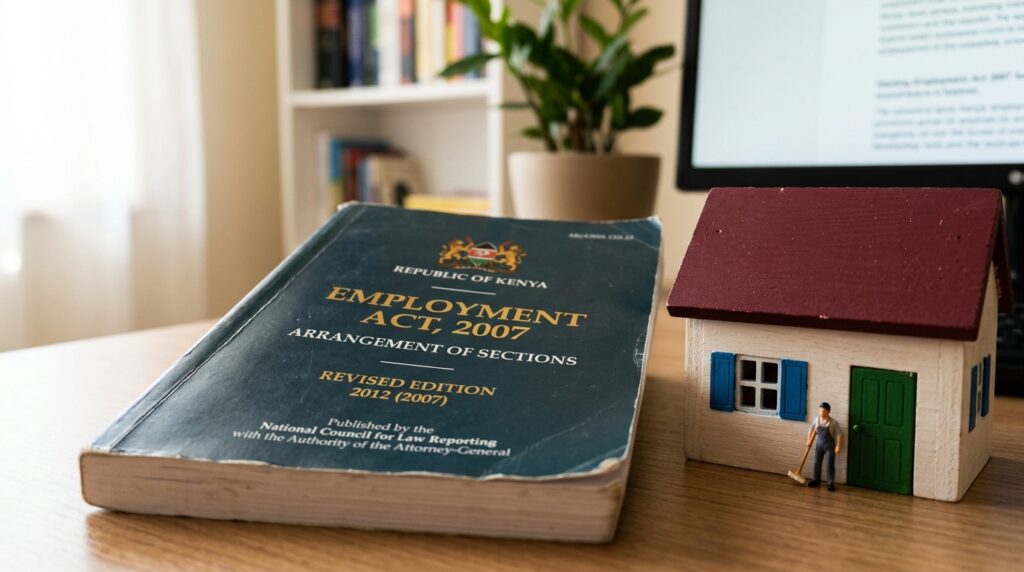
Here is the reality: Kenya’s Employment Act, 2007 covers domestic workers just as it does any other employee. Whether you work as a cook, nanny, housekeeper, gardener, or caregiver — or whether you employ one — the law applies to you.
This guide breaks down everything you need to know about your rights and responsibilities, in plain language that everyone can understand.
Why This Matters: House Helps Are Employees Under Kenyan Law
Many people assume that a house help is in a different legal category from a formal employee. This is a common misconception. According to Section 2 of both the Employment Act and the Labour Relations Act, an employee is a person employed for wages or a salary — and domestic workers are employees within the meaning of the law.
This means that a house help in Nairobi has the same foundational rights as a bank employee, a teacher, or an office worker. The law does not distinguish based on where the work is done.
In 2011, Kenya ratified the International Labour Organization (ILO) Convention 189 on Decent Work for Domestic Workers, further strengthening the legal protection for domestic workers. This convention ensures domestic workers have the same basic rights as other workers, including reasonable working hours, rest periods, and access to social security benefits.
Part One: Rights of the House Help in Nairobi
If you are a house help working in Nairobi, these are the rights the law gives you. You do not need to negotiate for them — they are yours by law.
The Right to a Written Employment Contract
You are entitled to a written contract that clearly sets out the terms of your employment. The Employment Act stipulates various provisions, such as the requirement for written employment contracts, the right to fair remuneration, and protection against unfair dismissal.
Your contract should include your job title, duties, salary, working hours, rest days, leave entitlements, and the notice period for termination. If your employer has not given you a written contract, you have the right to request one.
The Right to Annual Leave
Employees in Kenya are entitled to at least 21 days of paid annual leave after one year of employment. This means that as a house help, you are entitled to at least 21 working days of paid leave every year. Your employer cannot take this away from you, ask you to forfeit it, or replace it with money unless your employment is being terminated.
The Right to Sick Leave
Employees are entitled to 14 days of sick leave per 12 months of employment after working for a minimum of two months. Employers are required to pay the employee 100% of their regular wages for the first seven days of sick leave. The remaining seven days of sick leave are paid at 50% of the employee’s regular wages.
You will need to present a medical certificate from a qualified doctor to claim sick leave. Keep all your medical documents safely.
The Right to Maternity and Paternity Leave
All Kenyan female employees are entitled to three months of fully paid maternity leave. This applies to house helps just as it does to any other worker. An employer shall not dismiss a woman worker because of her absence from work due to maternity leave. Dismissing a house help because she is pregnant is illegal under Kenyan law.
The Employment Act provides for two weeks (14 working days) of paid paternity leave for male employees. Paternity leave recognizes fathers’ important role in early childcare.

The Right to Rest Days
Domestic workers are entitled to at least two days off per week. Your employer cannot require you to work seven days a week without rest. If you are asked to work on a rest day, you are entitled to overtime pay or a compensatory day off.
The Right to a Safe Working Environment
Employers must ensure that domestic workers have a safe and healthy working environment. This includes providing adequate living conditions for live-in workers, such as a private and secure room, and ensuring they have access to basic amenities like clean water and sanitation facilities.
You also have the right to be treated with dignity. Verbal abuse, physical mistreatment, or any form of harassment by an employer is illegal and can be reported to the relevant authorities.
The Right to Fair Termination
You cannot be dismissed without reason and without following the correct process. The Employment Act requires that termination be fair and justifiable, with adequate notice given. Employers must provide a valid reason for termination and, where applicable, offer severance pay.
Part Two: Rights of the Employer in Nairobi
Being an employer of a domestic worker also comes with legal rights that protect your household and your interests.

The Right to Set Reasonable House Rules
As an employer, you have the right to set clear, reasonable rules for your home. These can include conduct expectations, working hours within the legal limits, use of household appliances, privacy of your family matters, social media use during working hours, and expectations around the care of children or property. These rules should be communicated clearly and agreed upon in writing at the start of employment.
The Right to a Probation Period
You are legally permitted to place a new house help on a probation period — typically between one and three months. During this time, you can assess their skills, honesty, and suitability for your household. If they do not meet the required standard, you can terminate employment during probation with shorter notice, provided the process is fair.
The Right to Terminate Employment for Valid Reasons
An employer may dismiss an employee summarily when the employee has by their conduct indicated that they have fundamentally breached their obligations arising under the contract of service. Valid reasons for termination include theft, dishonesty, gross misconduct, consistent failure to perform duties, or a fundamental breakdown of trust.
However, even in cases of serious misconduct, the correct procedure must be followed — this generally includes informing the house help of the issue, giving them a chance to respond, and documenting the process.
The Right to Request a Certificate of Good Conduct
Before hiring, you have the right to ask a prospective house help to provide a Certificate of Good Conduct from the Directorate of Criminal Investigations (DCI). This is a reasonable and legal background check that protects your family and home.
The Right to a Notice Period Before Resignation
The Employment Act requires that termination be done with adequate notice given by either party. Just as you must give your house help notice before letting them go, they are also required to give you notice before leaving. The notice period should be clearly stated in the employment contract — this is typically between 7 and 30 days, depending on how long they have worked for you.
Part Three: Obligations of Employers Under Kenyan Law
Rights come with responsibilities. As an employer of a domestic worker in Nairobi, the law places the following obligations on you:
Provide a Written Contract
You must provide a written employment contract that outlines all the key terms of employment. An oral agreement alone is not sufficient protection for either party.
Provide a Safe and Dignified Working Environment
This includes appropriate accommodation for live-in workers, access to clean water, sanitation, and respectful treatment at all times.
Pay Wages on Time
Wages must be paid on or before the agreed payment date every month. Consistently delayed payment is a violation of the Employment Act and can result in a complaint being filed against you.
What Happens When Things Go Wrong: Dispute Resolution

Disputes between house helps and employers do happen. When they do, the law provides clear channels for resolution.
Step 1: Try to Resolve It Directly
The first step is always an honest, calm conversation between the employer and the house help. Many disputes stem from misunderstandings about expectations, pay, or duties — and can be resolved through direct communication.
Step 2: Contact the Labour Office
If a direct resolution fails, either party can approach the nearest Labour Office. Labour officers are authorized to mediate disputes and enforce compliance with the Employment Act. There are Labour Offices located across Nairobi including in the CBD, Eastlands, and other areas.
Step 3: File a Complaint with the Employment and Labour Relations Court (ELRC)
For more serious disputes — such as unfair termination, unpaid wages, or withheld benefits — the law provides for an aggrieved domestic worker to complain to the labour officer, or lodge a complaint in the Industrial Court (Employment and Labour Relations Court) under Section 86(1)(c) of the Employment Act.